The Migration from Coastal Density to Functional Estates: Why Capital Is Moving from West Palm Beach to Ocala
A structural shift is underway in Florida real estate, and it is being mischaracterized as a lifestyle trend.
It is not.
It is a capital migration driven by land scarcity, regulatory pressure, and the
search for productive, controllable assets.
Nowhere is this more evident than the movement from West Palm Beach and surrounding coastal markets into Ocala and Marion County.
The Coastal Constraint
Palm Beach County has reached a point where land is no longer flexible.
Density continues to increase. Available acreage is limited. Agricultural and equestrian uses are being displaced by residential development pressure.
Even historically equestriandominant areas like Wellington are experiencing rising land competition and price compression driven by residential demand.
The implication is straightforward:
High-net-worth individuals seeking land for livestock, equestrian use, or long-term estate planning are being structurally pushed inland.
Not by preference, but by economic inevitability.
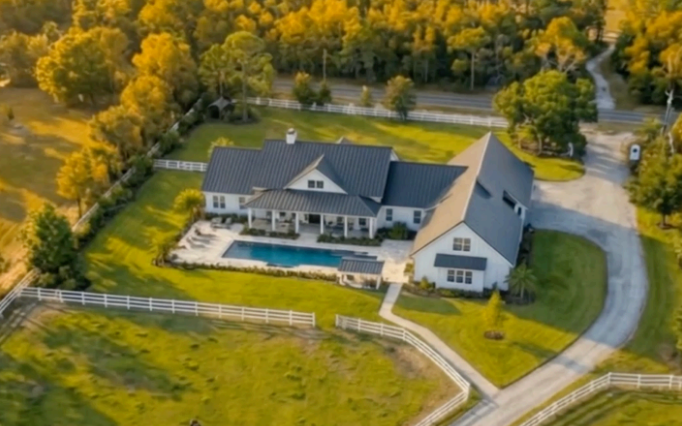
Ocala: A Different Market, Not a Cheaper One
Ocala is often misunderstood as a lowercost alternative.
In reality, it represents a different asset class entirely, one defined by production, land utility, and institutional alignment with agriculture and equestrian use.
The data reinforces this:
- Marion County is widely recognized as the “Horse Capital of the World, ” housing approximately 75,000 horses
- The local equine industry generates over $4.3 billion annually, accounting for roughly 22% of the county’s economic impact
- More than 210,000 acres are dedicated to equine activity, creating one of the most concentrated land-use ecosystems in the U.S.
- Statewide, Florida’s horse industry contributes approximately $12.8 billion annually
This is not incidental demand.
It is a deeply embedded economic system that stabilizes land values and preserves long-term use.
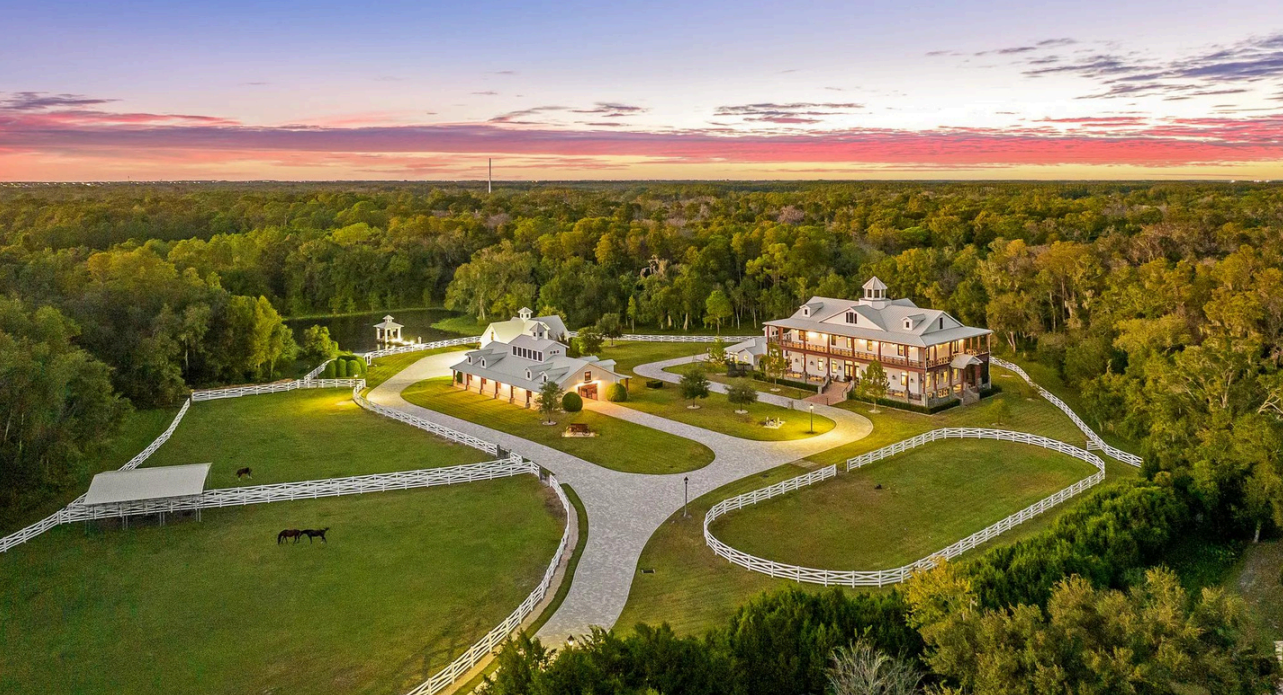
The Rise of Functional Estates
What is emerging from this migration is a new category of ownership:
Functional estates.
These are not traditional luxury homes. They are not purely agricultural holdings.
They are hybrid assets that combine:
➤ Residential living
➤ Livestock or equestrian infrastructure
➤ Agricultural capacity
➤ Long-term land preservation
This shift reflects a broader change in buyer psychology:
They are hybrid assets that combine:
From consumption → to control
From aesthetics → to utility
From short-term positioning → to generational ownership
Land is no longer just a backdrop.
It is becoming the primary asset.
Infrastructure Is Accelerating the Shift
This migration is being reinforced by institutional investment.
The World Equestrian Center, an approximately $800 million development, has positioned Ocala as a global equestrian hub, attracting international events, capital, and long-term infrastructure expansion.
At the same time:
➤ Nearly 20% of Marion County’s workforce is tied to the equine industry
This creates a rare dynamic in real estate:
An asset class supported not by speculation, but by ongoing economic production.
➤ Breeding
➤ Training
➤ Agriculture
➤ Long-term land use
What Happens Next
Most market participants will interpret this shift late.
They will enter through:
➤ Fully priced estates
➤ Retail residential acquisitions
➤ Lifestyle-driven purchases
But the real opportunity exists earlier:
In land that is:
➤ Not yet fully optimized for estate use
➤ Not yet positioned within this migration trend
➤ Not yet repriced by incoming capital
Because as migration continues, one outcome is predictable:
Land capable of supporting functional estates will not gradually increase in value. It will reprice in step with demand and scarcity.
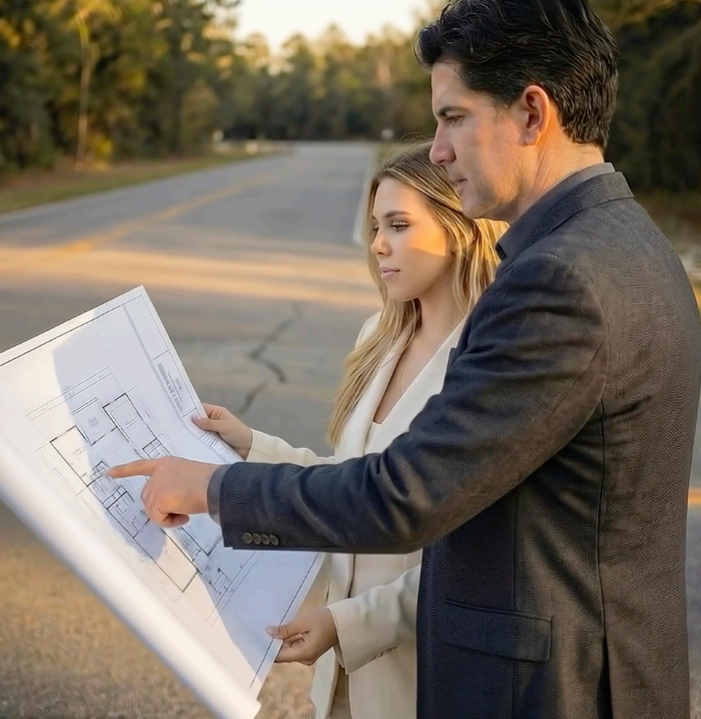
This is not a temporary relocation pattern.
It is a structural correction:
From density → to space
From passive ownership → to
productive land
From market participation → to asset
control
And regions that can support that transition at scale will not remain inefficient for long.
Ocala is one of the few that can.