The Housing Shortage Is a Narrative. The Constraint Is Structural.

Every cycle needs a headline.

Right now, it’s “housing shortage.”

It sounds compelling. It’s easy to repeat. It feels like an explanation.

But it’s incomplete.

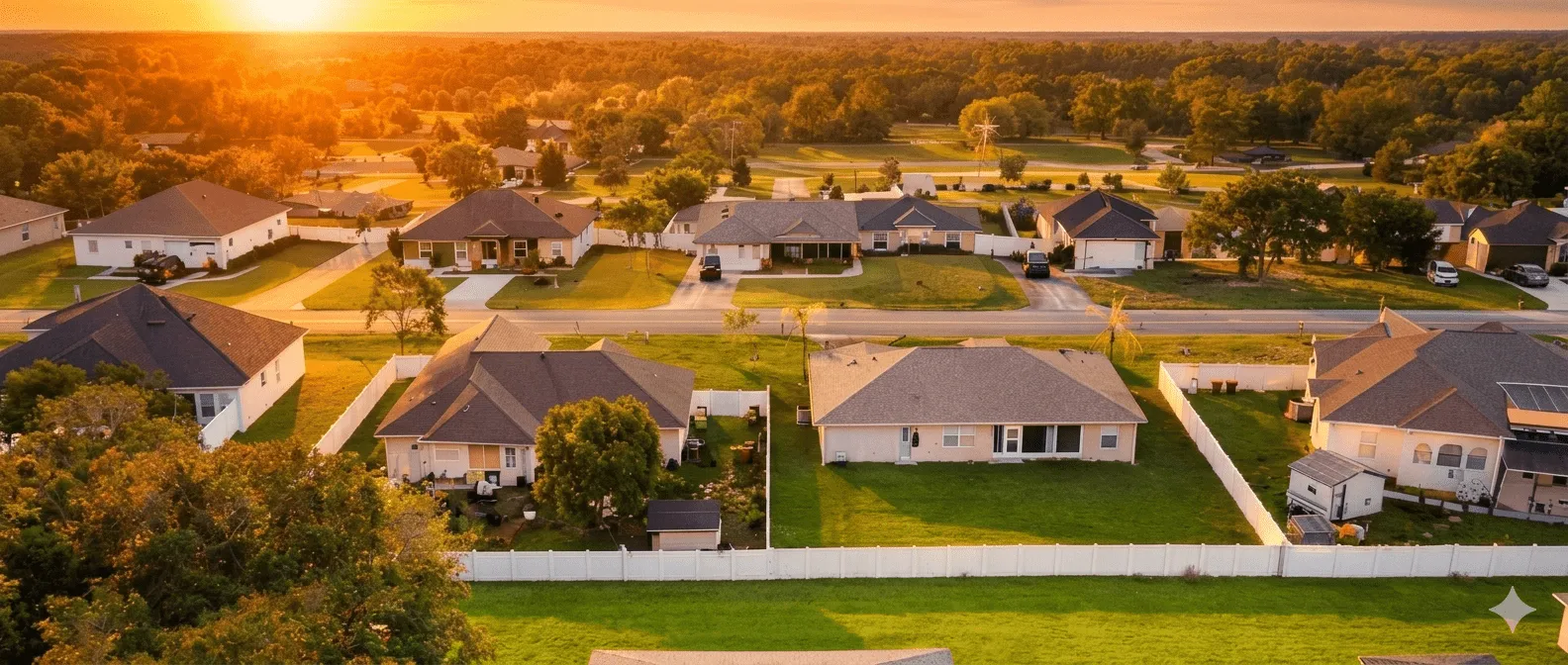
The United States, and Florida specifically, is not constrained by the absence of land. It is constrained by what that land is allowed to become.

This distinction matters more than most realize.

Across growth corridors, there are thousands of acres sitting under agricultural or lowdensity zoning classifications. These parcels are not inactive because they lack value. They are inactive because the regulatory framework surrounding them has not yet been restructured to support higher-density use.

As a result, the market behaves irrationally

Developers compete aggressively for the limited inventory of already-entitled land. Pricing becomes compressed at the development stage. Margins shrink. Projects become more sensitive to financing conditions.

Meanwhile, land that could support longterm housing supply remains underutilized, sometimes for decades.

This is not a supply issue.

It is a permission issue.

And permission, in real estate, is where value is created.

The moment a parcel transitions from agricultural designation to residential or mixed-use entitlement, it does not gradually increase in value. It reprices, often materially and immediately. That change is not driven by speculation. It is driven by the legal and economic transformation of the asset itself.

Most market participants engage after that transformation has already occurred.

They analyze construction costs. They evaluate exit pricing. They underwrite stabilized yield.

But by that point, the most asymmetric phase of the investment has already passed.

The current quarter is reinforcing this dynamic. With higher construction costs and continued uncertainty in capital markets, developers are becoming more selective. They are prioritizing projects with clear entitlement and predictable timelines.

This creates a widening gap.

Approved land becomes more competitive.

And permission, in real estate, is where value is created.

And in that gap, opportunity compounds.

The question is not whether housing demand exists. It does. The question is who is positioned early enough to control the assets that will eventually meet that demand.

Because in every cycle, the same sequence repeats:

Because in every cycle, the same sequence repeats:

First, land is repositioned.
Then, development follows.
Then, the narrative catches up.

We focus on the structural layer of the market, the point where land transitions from constrained to capable. That is where pricing inefficiencies exist, and where disciplined execution creates disproportionate outcomes.